In creative or minigame servers, players jump right into action. But in survival mode, things work differently. The appeal is in the journey—starting small, exploring wide, and slowly building something that feels truly earned.

That means your map design can’t just be focused on a cool-looking spawn. On survival servers, the entire world becomes part of the experience, and if the flow between areas is off—or if things feel too artificial—players lose immersion fast.
In this post, we’ll cover how to design a survival server that feels natural, immersive, and player-friendly from spawn to the outer wilderness. Whether you’re starting from scratch or upgrading an existing world, these tips will help you create a map that pulls players in and keeps them coming back.
Key Design Challenges in Survival Servers
Unlike PvP or minigame servers where the action is usually contained to a single zone, survival servers have no borders. Players go off in every direction, create their own paths, and stumble into whatever you’ve built—sometimes in the most unexpected ways.
But that freedom introduces a few design problems:
1. Players Need Freedom and Orientation
Yes, survival is about freeform gameplay. But if new players spawn in and have no clue where to go—or if they end up in a half-finished forest bunker with no signage—you’re going to lose them. The map has to give just enough structure to guide them, without feeling like it’s on rails.
2. Bases Often Feel Disconnected From the World
We’ve all seen it: a majestic spawn floating in the sky… and 30 blocks away, a dirt hut. When bases aren’t visually or geographically connected to the rest of the world, it breaks immersion. Players might still have fun, but they won’t feel like they’re part of a cohesive server.
3. Warps Break Immersion if They’re Placed Randomly
Fast travel is helpful—sometimes necessary. But when warps just teleport you to flat plots with no surrounding context, the world starts to feel like a set of disjointed rooms. A survival server should feel like a living world, not a menu with clickable buttons.
The challenge: build with freedom in mind, but structure in your bones.
Designing Organic Flow
Let’s talk about how to fix those issues—starting with the natural flow of your world. Just like a great open-world RPG, the environment should subtly guide players through landmarks, towns, and gameplay zones without ever breaking the immersion.
Blend Bases Into Natural Terrain
Encourage builders to incorporate terrain into their designs—and set the tone with your own admin-made areas. That means:
- Using elevation to nestle builds into hillsides
- Adding foliage and custom terrain details around structures
- Avoiding flat, artificial platforms unless they make narrative sense
Instead of placing a base in the middle of a blank field, imagine it emerging from the land itself—maybe it’s a ruined tower reclaimed by moss, or a cottage tucked between winding rivers.
Place Warps in Landmark Zones
Here’s a simple upgrade that makes a huge difference: every warp should lead to a meaningful location. Think:
- A shop hidden in the back of a bustling medieval market
- A PvP arena beneath a lava-cracked volcano
- A survival zone that starts at the foot of a broken bridge with torches leading into the wild
The key is to tie function to environment. When a player warps in and immediately feels like they’re part of a story—or part of the world—they’re way more likely to stick around.
Integrate Shops Into Towns or Paths
One of the biggest immersion killers is the “floating GUI shop” or the “chest room of riches in a blank square.” Don’t just plop your economy plugins somewhere random—build them into believable locations:
- A blacksmith’s forge with custom armor on display
- A bakery with bread in item frames and smoke billowing from chimneys
- A caravan of wagons where players can trade resources
Not only does this make the server feel alive—it gives builders inspiration for their own towns and shops, reinforcing the world’s aesthetic.
Support Exploration Without Losing Direction
Your server’s map shouldn’t feel like a railroad… but it also shouldn’t be a total wilderness. You want players to explore—but always find something interesting.
Here’s how to strike that balance.
Use Signage and Elevation as Guidance
Players notice where things are easy to walk. So use elevation, stairs, and terrain flow to gently steer players without overt arrows. Supplement that with tasteful signs or subtle paths:
- A sloped road from spawn with stone lanterns and subtle curves
- A fork in the road with signs pointing to “Valewood Outpost” or “Ravenpeak Market”
- Cracked cobble leading toward a hidden temple entrance
These micro-cues are easy to build—and players instinctively follow them.
Pathways Should Look Natural but Lead Somewhere Meaningful
In creative worlds, you can have perfectly symmetrical roads—but survival thrives on controlled imperfection. Think:
- Winding dirt paths through pine forests
- Bridges made of mixed blocks (slabs, mossy variants) that cross rivers
- Roadways that go from gravel → stone → bricks as you approach towns
These kinds of transitions make the world feel like it has history—and keep players moving naturally from one location to the next.
Spawn Should Feel Like a Town Square, Not a Box
This one’s critical.
Too many survival servers start players in a sterile room with glowing signs and a boxy floor. It might be efficient—but it kills the vibe.
Instead, design spawn like a place where people would actually live or gather. Picture:
- A town square with a fountain in the center
- Vendor stalls lining the outer ring
- A tavern, a gatehouse, and a few scattered player plots
Even if it’s small, this gives players a sense of belonging. From there, you can branch paths into starter zones, warps, or challenge areas.
Pro tip: Let the spawn evolve over time with community contributions—players love seeing their builds near the starting area.
Build Your Survival World on a Realistic Foundation
At the end of the day, great survival servers are built on thoughtful world design. And while you can technically let players run wild on a flat seed, you’ll get far better results when you start with a map that supports:
- Natural player movement
- Immersive environments
- Functional but beautiful design
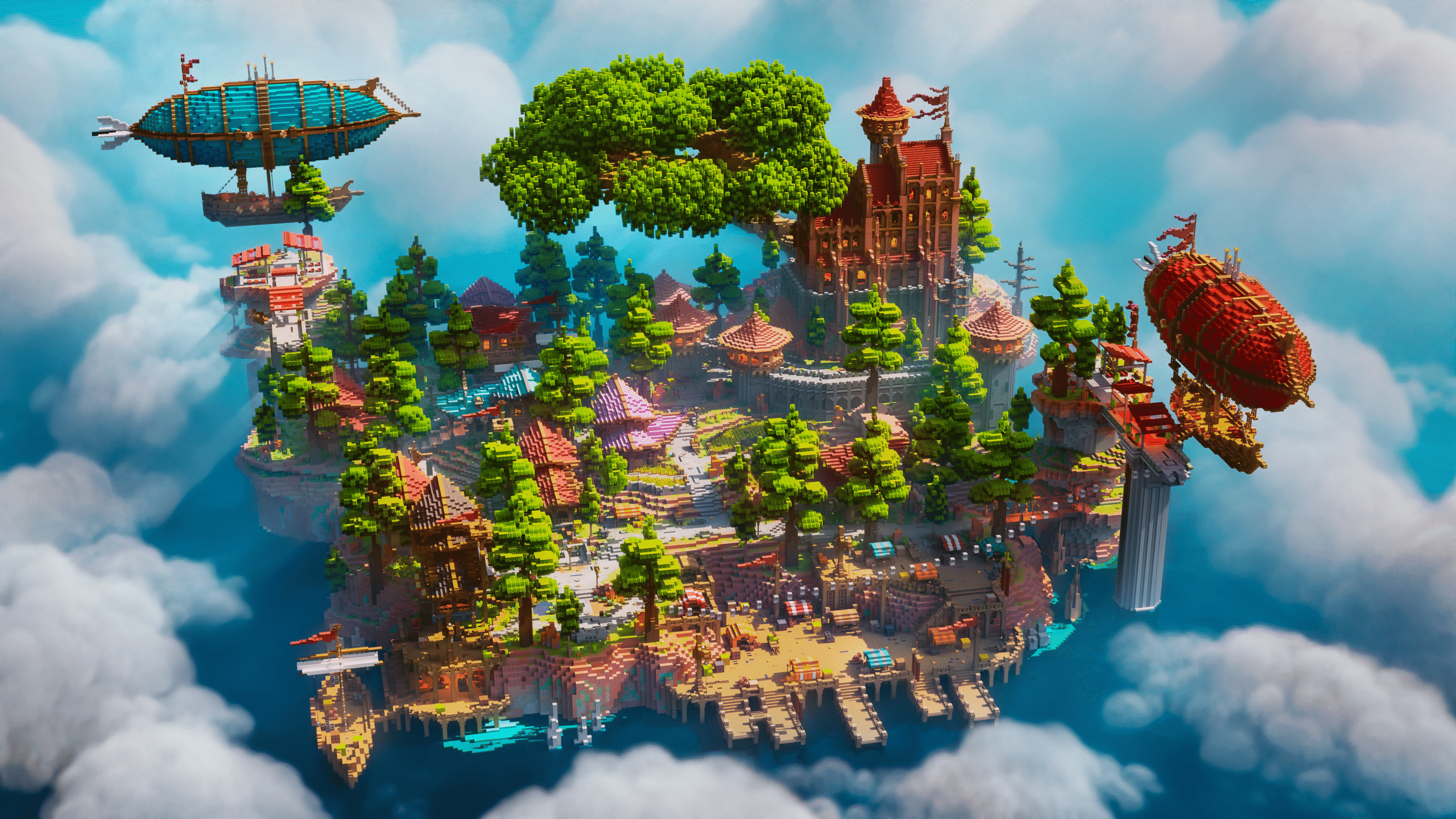
That’s where Keystone Builds comes in.
Our survival-ready maps are handcrafted to feel real—not artificial. That means:
- Carefully layered terrain
- Spawn areas that connect to wider zones
- Roads and paths that invite exploration
- Shop and warp zones built into actual architecture
Whether you’re starting your first survival server or revamping an existing world, choosing a well-designed map is the fastest way to:
- Reduce setup time
- Keep players immersed
- Avoid design burnout
- Offer a “wow” moment on day one
We’ve helped dozens of survival servers launch their journey with confidence—and we’d love to help yours too.Browse our survival maps and see how worldbuilding and functionality can go hand in hand. Your players will feel the difference—and you’ll build a server they never want to leave.